Intersecting AI, Pathogen Research, and Patient-Led ALS Protocols
At ArchBridge, our mission is built on a straightforward mandate: Delivering critical solutions in real time. Whether we are navigating semiconductor supply chain gaps, orchestrating complex warehouse logistics, or expediting critical medical supply shipments for regional healthcare networks like BJC, our approach remains anchored in decentralized action, rapid deployment, and practical problem-solving.
True to that philosophy, we look across our network and find an extraordinary intersection forming between patient-led neurological advocacy, independent medical research, open-source artificial intelligence, and physical spaces designed for human recovery.
Today, we are highlighting a series of interconnected frameworks and projects—spanning from decentralized open-source repositories to holistic healthcare protocols—that point toward a unified goal: breaking down the institutional silos that delay breakthroughs for Amyotrophic Lateral Sclerosis (ALS) and related neuroinflammatory conditions.
1. Reclaiming Agency: Healing ALS and the “47 Topics”
For too long, a diagnosis of ALS has been treated as an absolute endpoint by conventional medical pipelines. However, grassroots organizations like Healing ALS are proving that when patients and researchers unsilo their data, alternative realities emerge.
The core of their work centers on a meticulously aggregated, patient-tested protocol split across 47 critical health topics. Rather than viewing ALS through a single, isolated lens, this framework addresses the condition as a systemic, environmental, and neuroinflammatory challenge. From intensive cellular detoxification, heavy metal removal, and gut microbiome reconstruction, to targeting hidden viral or parasitic loads, these 47 steps have helped slow, stall, and in medically documented cases, reverse symptoms of motor neuron disease. It is a striking reminder that the answer to complex pathology lies in comprehensive, multi-angle strategy.
2. Targeting the Source: Project Tg (Toxic Gondii Research)
To stop a fire, you have to locate the spark. That is exactly where Project Tg—a collaborative initiative hosted under The-Band-Work collective—comes into play.
Project Tg is dedicated to the human “unsiloing” of basic and applied research surrounding the widespread intracellular parasite Toxoplasma gondii (TG bug). While traditionally minimized by mainstream diagnostics, emerging research identifies the latent, encysted phase of T. gondii in the brain and muscle tissues as a significant driver of chronic neurological inflammation and autoimmune disruption.
The project’s roadmap focuses on an open-source architecture designed to build a unified software stack and CRM. By gathering patient data and medical studies internationally, Project Tg aims to map out a precise matrix prioritizing research that can target the parasite, break through neural boundaries where chemistry meets electricity, halt localized inflammation, and pave the way for true cellular regeneration.
3. Scaling the Analytics: Project TeAI
Data accumulation is only as powerful as our ability to interpret it. Operating alongside the biological research of Project Tg is Project TeAI (Project AI), an open-source development initiative building targeted machine learning models and data-processing tools.
To map out complex neurological diseases, prioritize clinical trials, and run predictive analytics on how different bodies respond to various phases of the Healing ALS 47-step protocol, we need highly customized, independent artificial intelligence tools. By moving away from massive, generalized corporate AI models, Project TeAI focuses on lean, specialized, and sovereign applications that can process medical datasets securely and find hidden correlations between environmental triggers, parasitic loads, and symptom presentation.
4. Anchoring Recovery in the Physical World: Cabin3D
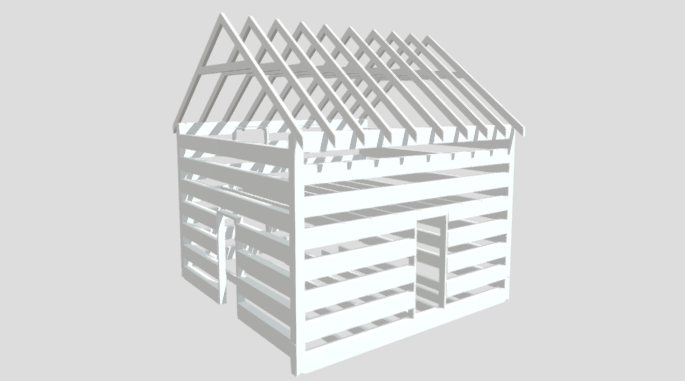
Solving global medical crises requires a dual commitment to both high-level digital infrastructure and immediate physical reality. This brings us back home to our own ongoing structural concepts, such as Cabin3D (accessible at archbridge.us/cabin3d).
True recovery requires spaces engineered for it. Cabin3D represents our vision for hyper-efficient, rapidly deployable, modular structural blueprints. Utilizing modern 3D-printing technologies and optimized material sourcing, these spaces can be customized into ultra-clean, toxin-free, and EMF-shielded residential recovery environments. For individuals undergoing rigorous detoxification protocols—such as those highlighted in the Healing ALS registry—having a controlled physical environment free from industrial mold, heavy metals, and environmental stressors is just as vital as any biological intervention.
The ArchBridge Perspective: Trading Silos for Solutions
Trade, open-source technology, and decentralized data networks share a common superpower: they bring people together to trade hope. When we link patient protocols (Healing ALS) with targeted pathogen research (Project Tg), accelerate those findings through independent computation (Project TeAI), and anchor them within clean, localized physical spaces (Cabin3D), we move past the slow-moving bottlenecks of traditional institutional medicine.
At ArchBridge, we will continue to look for ways to streamline supply lines, source materials, and support the decentralized networks building the future of real-time human health. Stay tuned as we track, support, and collaborate with these vital initiatives.